 Passage Notes Feb 2018
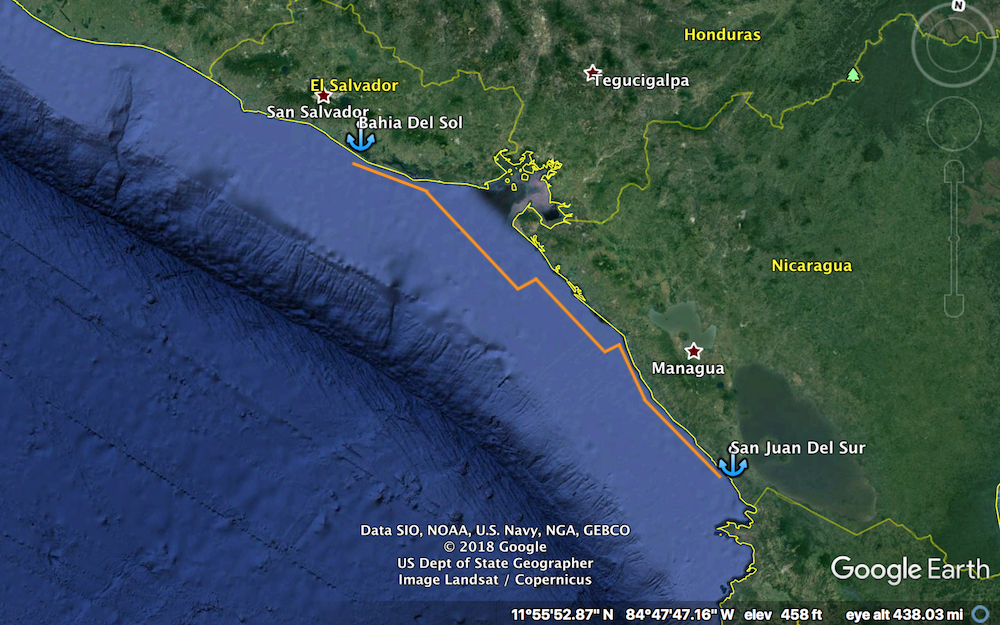
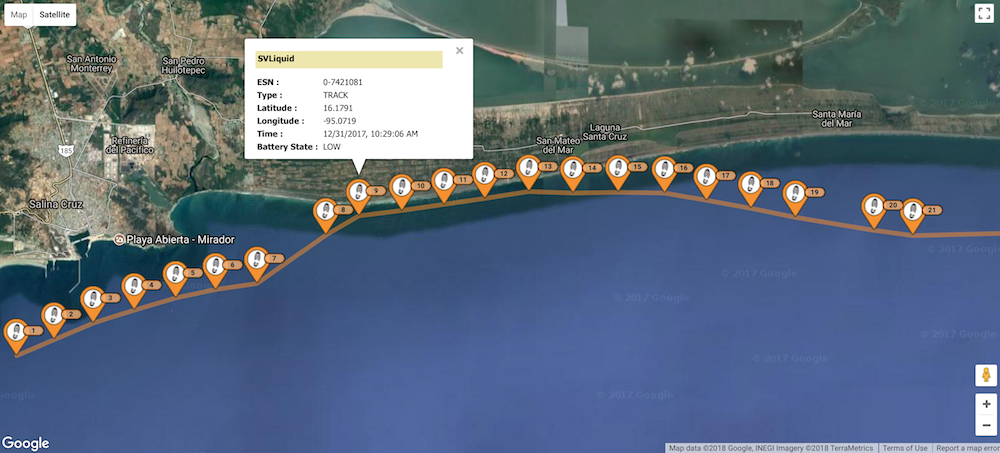
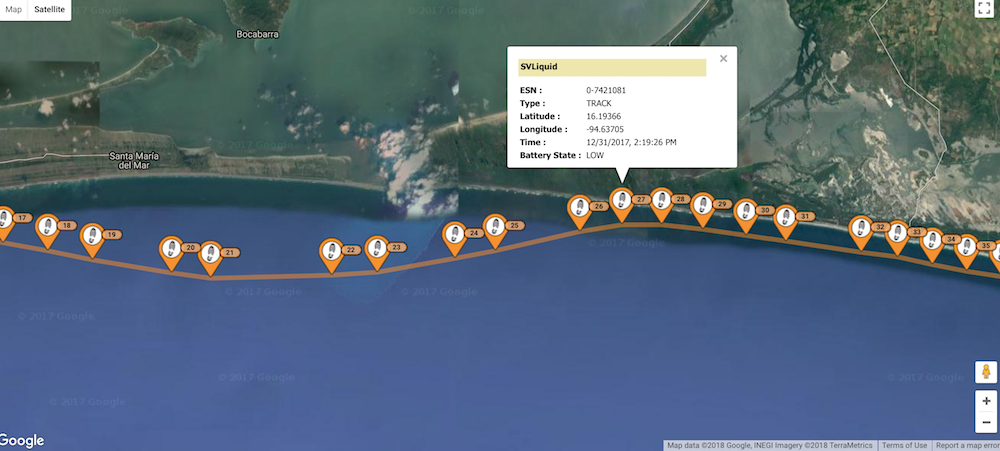
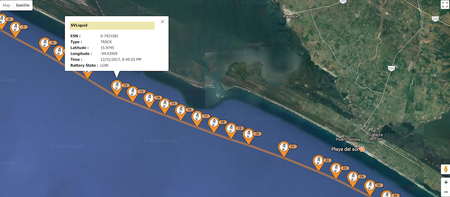
BDS to SJDS Crossing the Bar Bar crossing was fairly straightforward (min depth we saw was 9.6ft) Leaving before the actual slack tide still has plenty of current Lumpy confused seas for first hour or two. This was a real pain in the butt with low winds and nothing to steady us out. Seemed to have a counter current of over 1kt BDS to Fonseca Still had current Still lumpy Light winds Crossing Fonseca With lower winds and better seas we cut from Lempa shoals straight towards Puesta del Sol Counter current for most of the crossing Motorsail first half with lighter winds Sail 2nd half w good wind (15-20kts) About 20 miles offshore When winds died later that morning we used the opportunity to motorsail directly towards shore. When the wind picked up again we were 8 miles out. Nice light air sailing with small swell and 4-7kts wind No fishing boats seen in this area (maybe because of commercial traffic that heads into Fonseca…) Near Corinto – Night Still motorsailing in low wind but put 2reef in main after a message from Carinthia about high winds to the south Short time later a very quick change in winds to 20-25kts and short steep 4-6ft seas We were still 8 miles out and so quickly turned 90deg and headed straight in for shore. Stayed (1to3 miles) It was night so we didn’t want to get much closer… All winds on the nose (almost parallel to the coast) making sailing difficult if we wanted to stay close to shore. Our experience was that fishing lines were all lit at both ends at night. This made them easier to identify and avoid. If you saw one, you would locate the 2nd light and avoid passing between them. This worked well for us. Maybe we were just lucky? Corinto to El Astillero This was a rough section We were 1-3 miles out which we would learn later was still too far. 2reef main to steady us. Trying to sail kept pushing us offshore which quickly became less and less comfortable. Winds were 25-30kts on the nose. Seas were 3-5ft very close. Mostly all just wind chop on top of small swell. All this made for a tough 80 mile beat to El Astillero. Pounding straight into relentless wind and wave. We knew we wouldn’t make SJDS before dark so we pulled into El Astillero to rest. El Astillero Lots of room and quite comfortable in the anchorage. We were boarded within an hour by local officials. They checked our paperwork and did a quick search of the inside of the boat. At first it looked like we may have to ride in with them to check paperwork on shore but eventually they decided to just take pictures of everything and call it good. They did state that we couldn’t go ashore and need to leave first thing in the morning as we hadn’t checked into the country yet. El Astillero to SJDS With 25-30kt winds directly on the nose we decided to keep the sails packed away and just try to be a motorboat. We stayed very close to shore (1/4 – ½ mile) and stayed in 40-50ft of water. This actually worked out great for us. It was noticeably less comfortable as soon as we got any farther out. There are definitely obstacles to avoid when you are this close but the seas were very actually quite comfortable. There was enough wind on the bare poles and stack pack to keep us steady for any other side motion. Unfortunately fishermen are actually harder to spot during the day and we did run over one net. We actually saw the panga and had identified the buoy that was the end of the line. We went around the outside but there must have been a bunch of loose line out past it that we got caught on. We were able to cut it loose but the lesson was learned. It really helps to identify if they are pulling in a net or just sitting around. If the motor is up and someone is standing in the front they are probably pulling in net. This make it better to go past the back of the panga (with a wide berth of course). Lessons Regardless of forecast stay as close to the beach as you are comfortable navigating. Wind in Nicaragua will be almost parallel to the coast towards Fonseca. This wind will create a counter current of 1-2kts. To do it again I would travel only during the day and in short hops. Daytime made it much more reasonable to identify hazards and to be so close to shore. Get comfortable being a motorboat. 1/5/2018 Crossing the Tehuantepec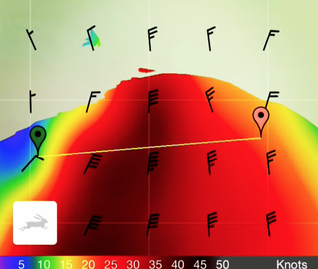 Tehuantepec Crossing The guidebooks say that the worst time to cross the Tehuantepec is December to February. Unfortunately for us our timing had us in the area right smack at the end of December. Oh well. Our time in Huatulco was nice but with weather windows becoming shorter in duration and farther apart on the calendar we decided to jump on the one Dec 31, 2017. We had 260 miles from Huatulco to Chiapas and we weren’t really sure how much of it would be affected by the higher wind speeds. We knew for sure we had 60 – 70 miles in the meat of it. According to Wikipedia Tehuantepecer "Tehuantepecer, or Tehuano wind, is a violent mountain-gap wind traveling through Chivela Pass, most common between October and February, with a summer minimum in July. It originates from eastern Mexico and the Bay of Campeche as a post-frontal northerly wind, accelerated southward by cold air damming, which crosses the isthmus and blows through the gap between the Mexican and Guatemalan mountains. The term dates back to at least 1929.[1] This wind can reach gale, storm, and hurricane force. Tehuantepec winds reach 20 knots (40 km/h) to 45 knots (80 km/h), and on rare occasions 100 knots (200 km/h). The wind’s direction is from the north to north-northeast.[3] It leads to a localized acceleration of the trade winds in the region, and can enhance thunderstorm activity when it interacts with the Intertropical Convergence Zone.[4] The effects can last from a few hours to six days.[5]" The window was pretty tight with just 12 hours predicted at slightly less than 20kts but we decided to go for it. The guidance is pretty clear of what to do in these windows. “Stay as close to shore as is reasonably prudent”. The area where all the wind seems to come from is Bahia Ventosa near Salinas Cruz in Mexico. In order to cross the slot with the highest wind speeds at the best time we would need to leave Huatulco at 12am. Our plan was to stay about a mile offshore until Salinas Cruz. On the West side of Bahia Ventosa there are mountains inland to shelter you from the worst of the wind. You can hug the coast and stay in the lee of the mountains until the very last moment. You stay a mile off here in order to avoid a few hazards that lay off the coast. Once you cross Salina Cruz and leave the lee of Cerro Morro you are into Bahia Ventosa and into the belly of the beast. Here the plan was to get within ¼ mile of the beach and into 30-40 ft of water. This way there is no fetch and so even if the wind is higher than forecast you don’t have to deal with any swell or wind wave. While you are closer to shore than you ever thought comfortable, the wind is pushing you South so the shore is not an issue. After that there are two lagoon entrances on the way to Chiapas that can have breaking waves you get too close to them. We watched the waypoints and made sure we were well clear. The rest of the passage was quite mellow with lighter winds all the way to Chiapas. We motorsailed in order to keep our speed up and make sure we arrived well before dark. Chiapas was an easy entrance and once we had our Navy Inspection and were checked in we poured ourselves some well deserved Margaritas!! Want to know more about SVLiquid?? Dial in to our Facebook page to get updated info on our progress - www.facebook.com/svliquid Just want to see pictures? Follow on Instagram - www.instagram.com/svliquid Like videos? Follow our YouTube channel - https://www.youtube.com Here are the notes from the passage 12am - 5 AM Leaving Huatulco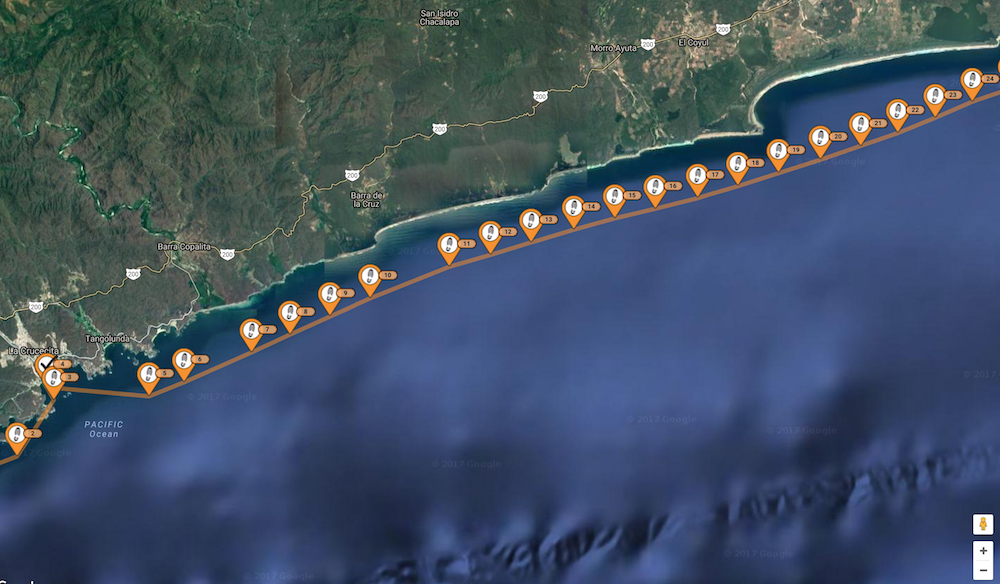 Using Radar to stay a little over 1 mile off the coast No headsail, double reefed main and mizzen - Not sure what we are getting into or when the wind will increase.... Light wind F1-F2 Small easy swell off starboard bow 1.5kt current assist 3am - No more cell service 4am Current 0.0 Light wind small swell 5AM - 8AM Approaching Salinas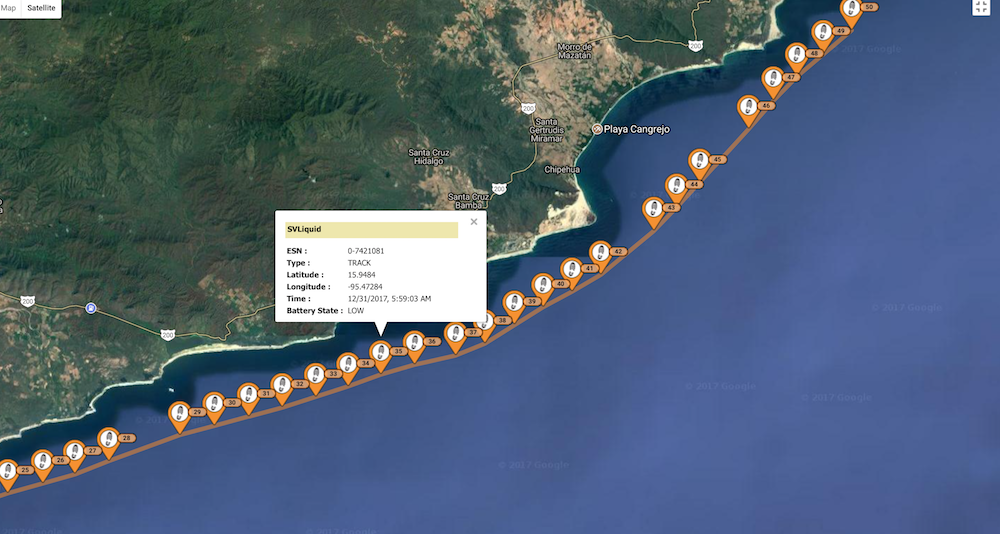 6am - Bamba bay Light wind small swell 1kt counter current 7am Cell service returns Punta Chiphua Wind starting to increase 8am - Approaching Salinas Wind F4 directly on nose. (NorthEast) Counter Current now less than 0.5 8AM -12PM Salinas to BocA San Francisco
9am Pass inside #3 Superbuoy at Salinas entrance Wind NE F3-F4, small chop No current 10am Entering Bahia Ventosa Wind N F4. Choppy Wind quickly increases to F5 with occasional F6 gusting higher. 12:00pm - Boca San Francisco We were over 2 miles out and in 80ft of water. No need to go out that far. Looking in towards the bar we still couldn’t see the breakers. Wind F5 steady (North) Wind waves now about 3ft and noticeably less comfortable than when we were closer than a half mile to the beach. 12PM - 10PM Boca SF to Boca de Tonala
5pm Wind down Wind NE F4 3 ft rollers on the stern 1 kt counter current 7pm. Working our way out in order to pass Boca de Tonala We will pass 2 miles out since it’s dark and we can’t see the breakers. It’s probably father out than we need. Wind back up to F5 from the East. (Port Bow) Counter current is 1.2kts Short Swell 5-6ft on the stbd stern qtr. 10pm Pass Boca de Tonala Still windy at F5 Start working our way closer to the beach to get out of the bigger waves. 12AM - 3PM PAST BOCA TONALA to CHiapas
12am
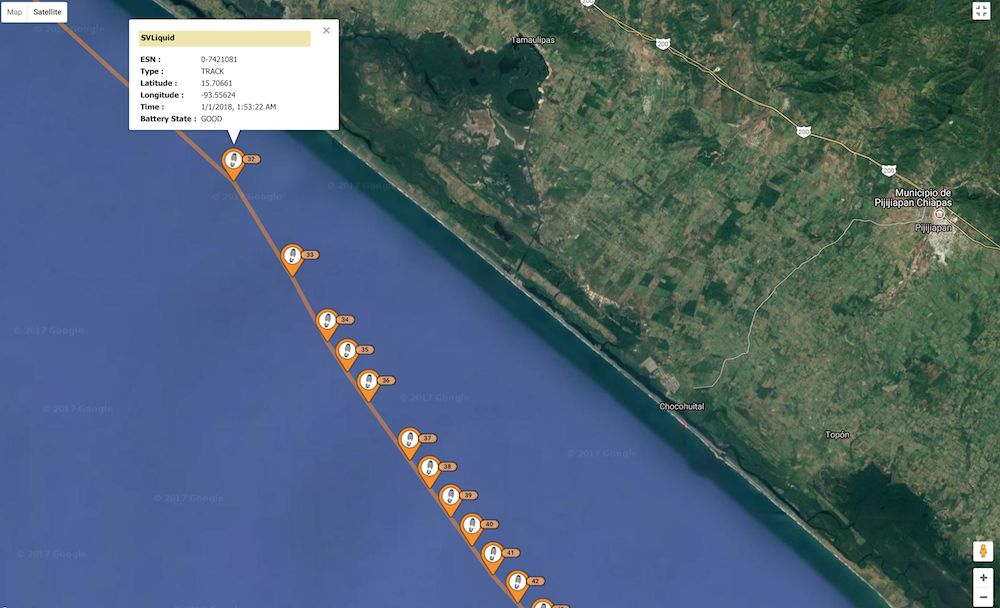
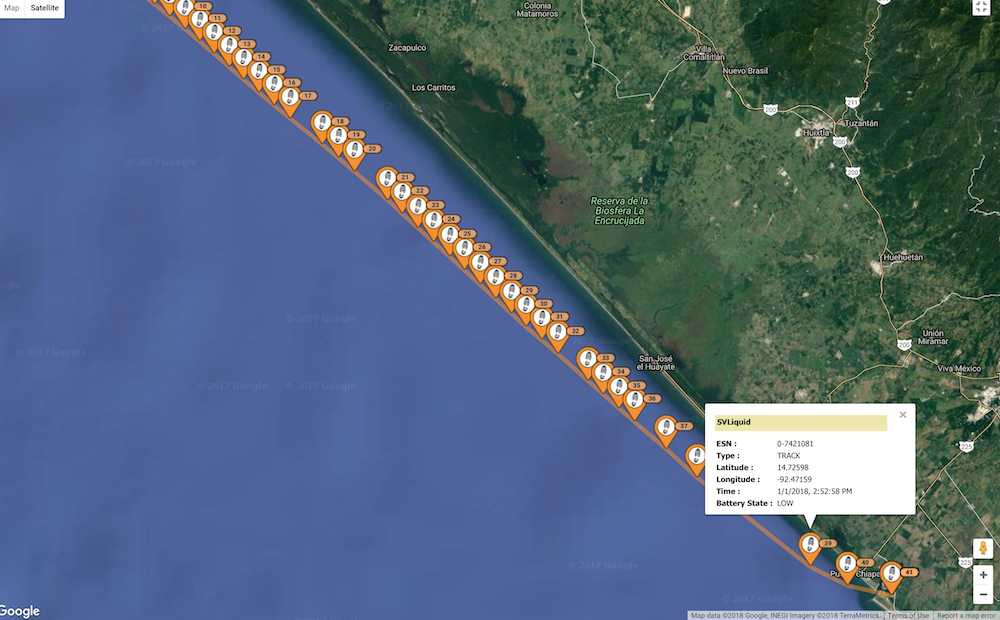
Happy New Years!! Dolphins for New Years!! Fireworks visible up and down the beach Wind down to F1 - F2 Swell 1-2 Counter current about 0.5 2am Moving offshore to avoid shoals marked on my Navionics charts 15 32.46N 93 21.89W Feeling good about moving offshore Wind F0-F1 Swell From NE 1-3 ft 6am Pretty Chill Wind F0-F1 Swell From NE 1-3 ft An easy run from here to Chiapas. A few fishing boats to watch out for but they were big and easy to see. That was it. Overall not bad at all. If you are comfortable sailing in 20-30kts then this is actually very reasonable. The biggest thing is that it can get very ugly very quickly as you venture farther offshore. We noticed a big difference within a mile or two. I would guess that it is less and less comfortable the farther out you get. Our advice is the same as all the previous boats before us. 1 - Wait for a good window. 2 - Stay close to shore. 3 - Go Go Go. Thanks to everyone for all the constructive feedback so far! Dial in to our Facebook page to get updated info on our progress - www.facebook.com/svliquid Just want to see pictures? Follow on Instagram - www.instagram.com/svliquid Like videos? Follow our YouTube channel - https://www.youtube.com  5 Easy Steps to keep your US number and have it forward to any International Cell Phone The text message I received from T-Mobile said
"T-Mobile works with wireless partners to provide coverage when traveling outside our coverage area; but, this roaming benefit is meant for occasional use. Our systems show most usage for the last several months on 510xxx-xxxx was roaming off our network. This violates Terms & Conditions and so the line is scheduled for disconnection on July 27 2017. For details and contact info if you feel this is an error, visit http://t-mo.co/1NlsgDA" Oops. I guess I never actually read the Terms & Conditions. I thought my North America Plan would be fine while I was in Mexico for the winter. Oh well. I guess I'll be losing my US cell service at the end of the month. I was going to have to deal with what to do now. One way or another I would eventually need to deal with it once I left Mexico in December. So. First thing is that I wanted to be sure to be able to keep my current phone number. I have had it for a long time and don't want to bother everyone to update their phone books every time I get to a new country. I also wanted to be able to have it forward to whatever my local cell phone number would be in the country I would be then. Next I didn't want to be paying monthly to keep all of this alive on top of whatever my local service was going to cost me. Here is how I did this. Please note that I started with an "Unlocked" phone. 1 - Get a local SIM card and "pay as you go" plan for my phone 2 - Setup a VOIP phone with a US phone number 3 - Forward this number to my current cell 4 - Port my current US T-Mobile number to Google Voice 5 - Forward my old number (now on Google Voice) to the VOIP phone number That's the quick version. Stop here if you just want to understand the basic steps for how it's done. If you are stopping here you may be interested in the following links.... Dial in to our Facebook page to get updated info on our progress - here Just want to see pictures? Follow on Instagram - here Prefer to watch video updates? Subscribe to YouTube - here Please be sure to SHARE this if you think it may help others.. If you want to follow along on how it's done you may want to continue reading as I go over each step in detail..... |
AUTHORSMarc and Laura. Hit SUBSCRIBE to follow our adventure on YouTube. Archives
July 2018
Categories |
 RSS Feed